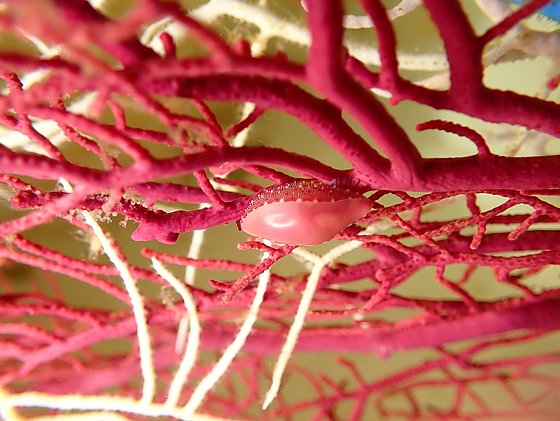
Corals, such as seagrass meadows and kelp forests, are architects of marine habitats. By building complex three-dimensional structures, they shape entire ecosystems, create habitats, protection and food sources for an enormous variety of organisms and make key contributions to coastal stabilisation, climate regulation and marine food security. At the same time, these systems are among the most threatened habitats in our oceans.
The basis of the ecological success of shallow-water troop coral reefs lies in a close biological partnership: photosymbiosis with unicellular, photosynthetic dinoflagellates that live in the gastrodermis of the hosts. This symbiosis efficiently supplies the animals with energy and nutrients and enables growth, reproduction and - in the case of reef-building corals - the formation of massive calcareous skeletons. However, this relationship is sensitive. Even comparatively small environmental changes can disrupt the balance and have far-reaching consequences for the entire organism.
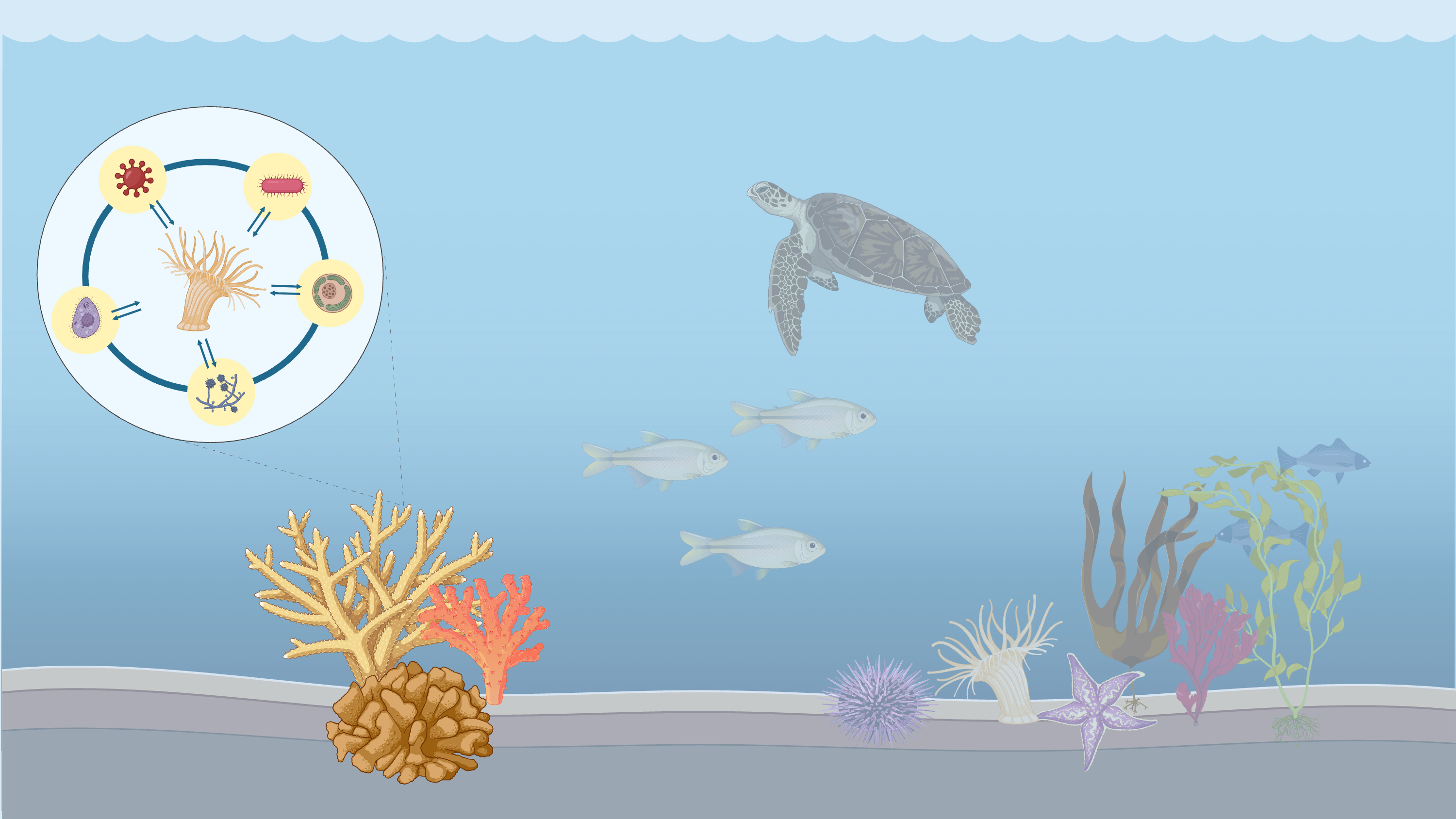
But before we talk about corals, it is worth taking a look at their smallest but crucial partners: microorganisms.
Like all multicellular organisms, Cnidaria live in close association with complex microbial communities of bacteria, archaea, fungi, viruses and protists. Together with the host and the photosymbionts, they form the holobiont - a functional unit in which metabolism, immune defence, stress reactions and adaptation processes are closely linked. These microbial partners can contribute to the stabilisation of photosymbiosis, regulate nutrient flows and, under certain conditions, even increase tolerance to environmental stress. Changes in the microbiome, on the other hand, can significantly increase the host's susceptibility.

In our project, we are investigating these complex interactions in a model organism, the glass rose Exaiptasia diaphana(Cnidaria, Hexacorallia, Anthozoa). Exaiptasia allows us to analyse central processes of photosymbiosis and holobiont dynamics under controlled laboratory conditions and serves as an important bridge between experimental research and natural coral reef systems.
A particular focus of our work is on anthropogenic stressors, which are increasingly converging in marine coastal ecosystems. In addition to rising water temperatures, we are specifically investigating the effects of persistent pesticides, including so-called legacy herbicides such as the herbicide atrazine. The use of this herbicide in agriculture has been banned in the EU since 2004, but it is still used in Australia, the USA and China and remains one of the most frequently applied pesticides in terrestrial and aquatic habitats. Atrazine directly interferes with electron transport in photosystem II and therefore poses a direct threat to photosymbiotic organisms. It can also influence processes such as development, immune response, metabolism and the composition of the microbiome.
Using experimental ex-situ systems, we analyse how temperature stress and pesticide exposure alter symbiont photophysiology, host gene expression, microbial community, and overall holobiont health and development. The aim is to identify mechanisms and/or microbes that promote the resilience of corals under changing environmental conditions.
In the long term, this project will contribute to the functional understanding of photosymbioses and their role as dynamic networks with adaptive potential. A better understanding of the role of microbial communities opens up new perspectives for microbiome-informed protection and restoration strategies and provides important foundations for the conservation of photosymbiotic Cnidaria and the marine ecosystems they build.